🇺🇸🇮🇷 Oil is already costing around $140 a barrel in the physical market, and the worst of the price shock may still be ahead.
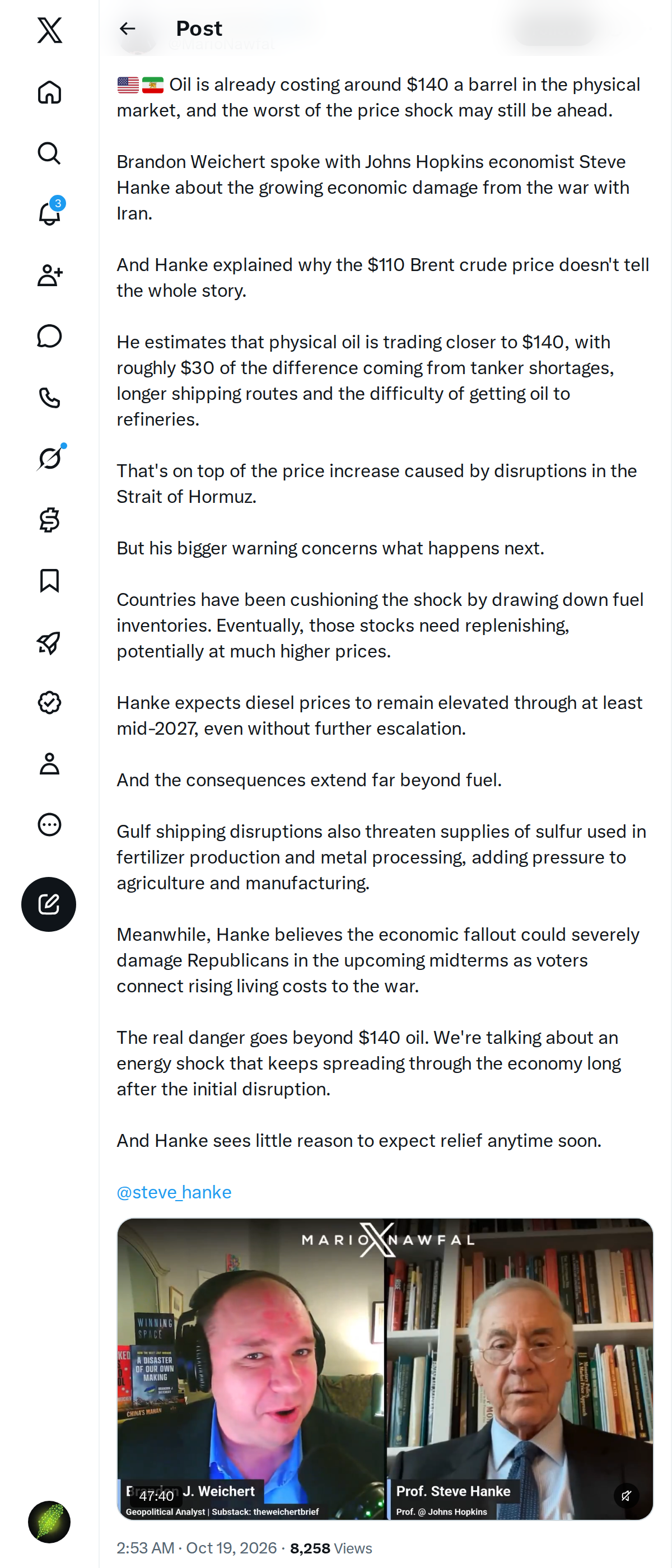
Brandon Weichert spoke with Johns Hopkins economist Steve Hanke about the growing economic damage from the war with Iran.
And Hanke explained why the $110 Brent crude price doesn't tell the whole story.
He estimates that physical oil is trading closer to $140, with roughly $30 of the difference coming from tanker shortages, longer shipping routes and the difficulty of getting oil to refineries.
That's on top of the price increase caused by disruptions in the Strait of Hormuz.
But his bigger warning concerns what happens next.
Countries have been cushioning the shock by drawing down fuel inventories. Eventually, those stocks need replenishing, potentially at much higher prices.
Hanke expects diesel prices to remain elevated through at least mid-2027, even without further escalation.
And the consequences extend far beyond fuel.
Gulf shipping disruptions also threaten supplies of sulfur used in fertilizer production and metal processing, adding pressure to agriculture and manufacturing.
Meanwhile, Hanke believes the economic fallout could severely damage Republicans in the upcoming midterms as voters connect rising living costs to the war.
The real danger goes beyond $140 oil. We're talking about an energy shock that keeps spreading through the economy long after the initial disruption.
And Hanke sees little reason to expect relief anytime soon.
@steve_hanke tweetkeep