🇺🇸🇮🇷 Oil markets are pricing in the latest Hormuz disruption, and the global system is still adapting rather than breaking.
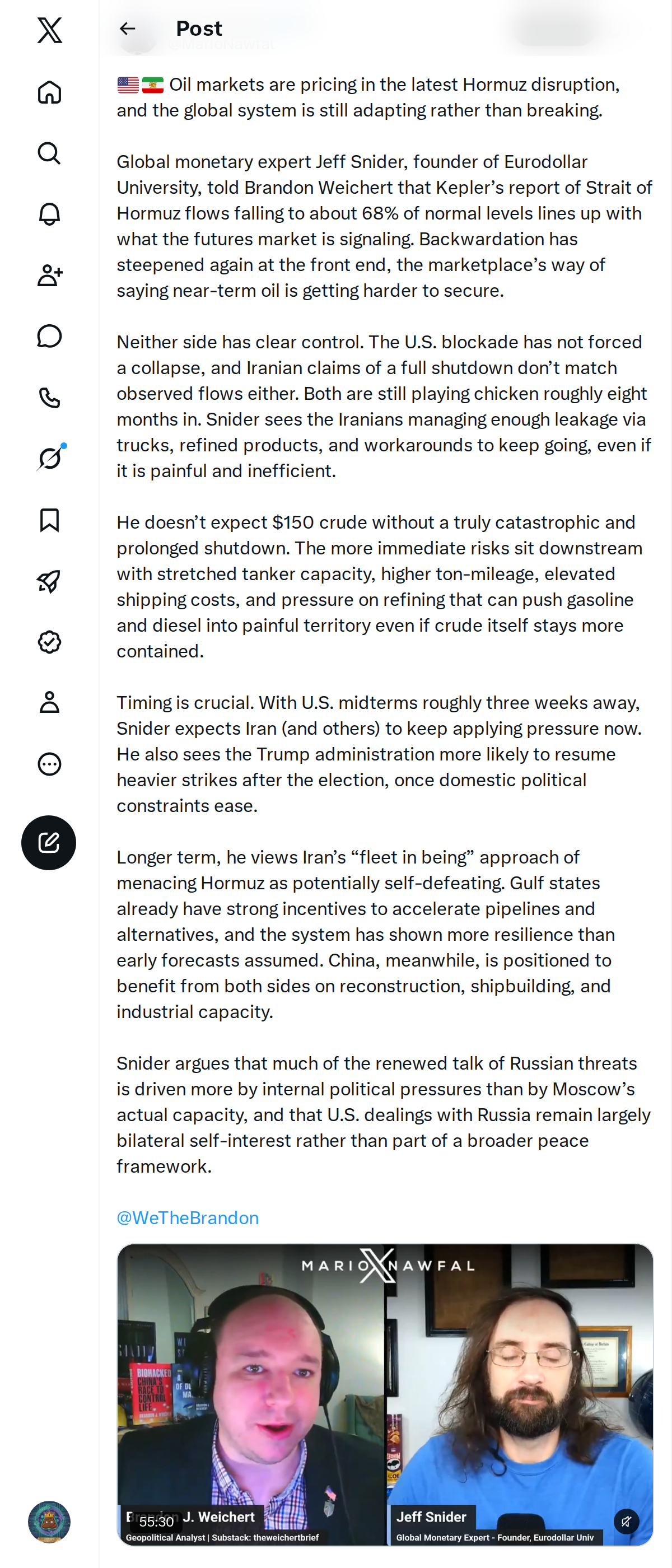
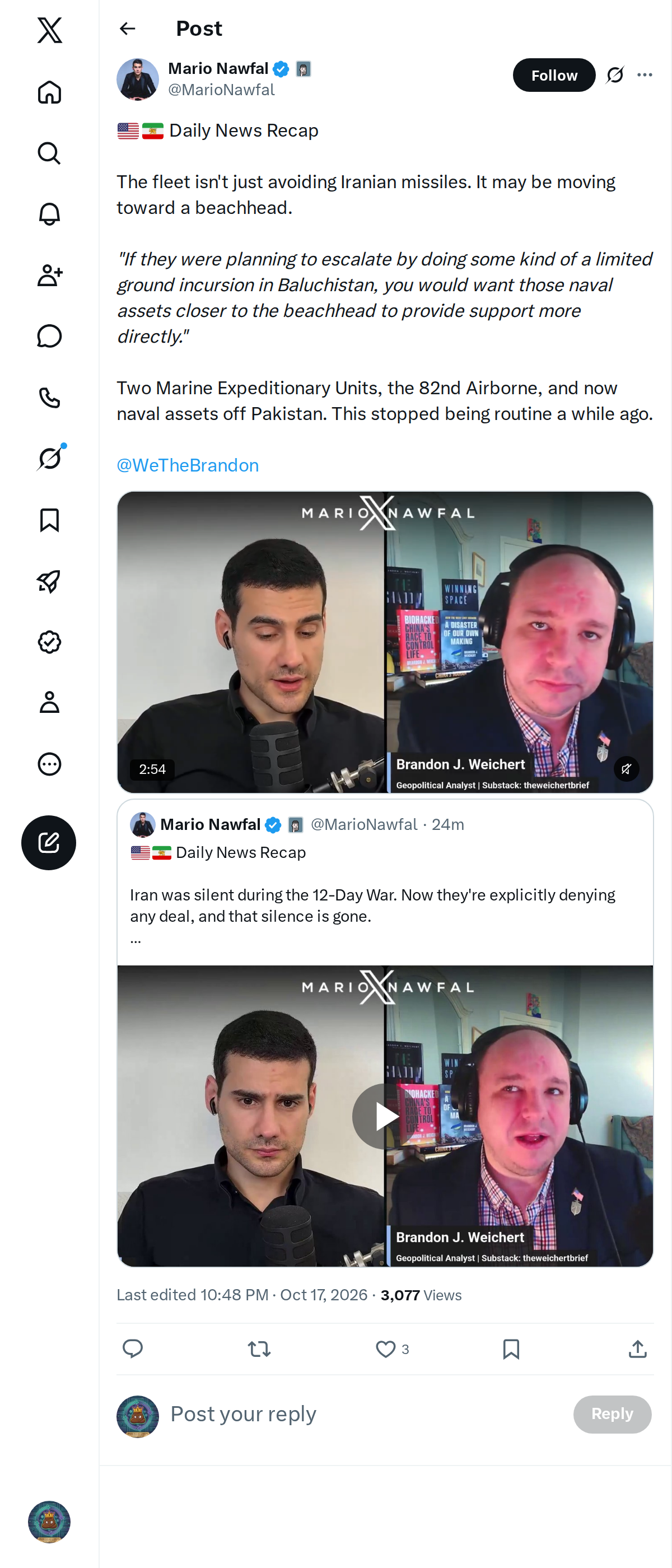
Global monetary expert Jeff Snider, founder of Eurodollar University, told Brandon Weichert that Kepler’s report of Strait of Hormuz flows falling to about 68% of normal levels lines up with what the futures market is signaling. Backwardation has steepened again at the front end, the marketplace’s way of saying near-term oil is getting harder to secure.
Neither side has clear control. The U.S. blockade has not forced a collapse, and Iranian claims of a full shutdown don’t match observed flows either. Both are still playing chicken roughly eight months in. Snider sees the Iranians managing enough leakage via trucks, refined products, and workarounds to keep going, even if it is painful and inefficient.
He doesn’t expect $150 crude without a truly catastrophic and prolonged shutdown. The more immediate risks sit downstream with stretched tanker capacity, higher ton-mileage, elevated shipping costs, and pressure on refining that can push gasoline and diesel into painful territory even if crude itself stays more contained.
Timing is crucial. With U.S. midterms roughly three weeks away, Snider expects Iran (and others) to keep applying pressure now. He also sees the Trump administration more likely to resume heavier strikes after the election, once domestic political constraints ease.
Longer term, he views Iran’s “fleet in being” approach of menacing Hormuz as potentially self-defeating. Gulf states already have strong incentives to accelerate pipelines and alternatives, and the system has shown more resilience than early forecasts assumed. China, meanwhile, is positioned to benefit from both sides on reconstruction, shipbuilding, and industrial capacity.
Snider argues that much of the renewed talk of Russian threats is driven more by internal political pressures than by Moscow’s actual capacity, and that U.S. dealings with Russia remain largely bilateral self-interest rather than part of a broader peace framework.
@WeTheBrandon tweetkeep