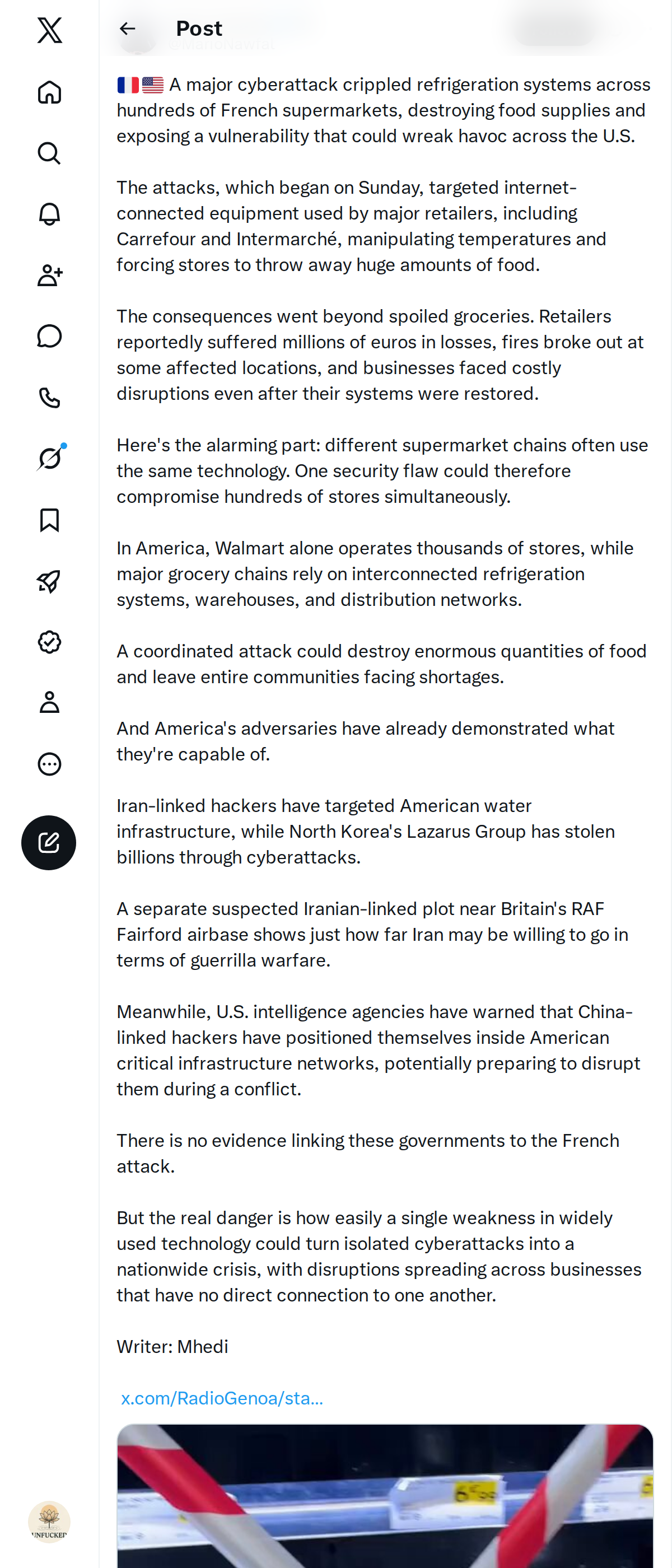
🇫🇷🇺🇸 A major cyberattack crippled refrigeration systems across hundreds of French supermarkets, destroying food supplies and exposing a vulnerability that could wreak havoc across the U.S.
The attacks, which began on Sunday, targeted internet-connected equipment used by major retailers, including Carrefour and Intermarché, manipulating temperatures and forcing stores to throw away huge amounts of food.
The consequences went beyond spoiled groceries. Retailers reportedly suffered millions of euros in losses, fires broke out at some affected locations, and businesses faced costly disruptions even after their systems were restored.
Here's the alarming part: different supermarket chains often use the same technology. One security flaw could therefore compromise hundreds of stores simultaneously.
In America, Walmart alone operates thousands of stores, while major grocery chains rely on interconnected refrigeration systems, warehouses, and distribution networks.
A coordinated attack could destroy enormous quantities of food and leave entire communities facing shortages.
And America's adversaries have already demonstrated what they're capable of.
Iran-linked hackers have targeted American water infrastructure, while North Korea's Lazarus Group has stolen billions through cyberattacks.
A separate suspected Iranian-linked plot near Britain's RAF Fairford airbase shows just how far Iran may be willing to go in terms of guerrilla warfare.
Meanwhile, U.S. intelligence agencies have warned that China-linked hackers have positioned themselves inside American critical infrastructure networks, potentially preparing to disrupt them during a conflict.
There is no evidence linking these governments to the French attack.
But the real danger is how easily a single weakness in widely used technology could turn isolated cyberattacks into a nationwide crisis, with disruptions spreading across businesses that have no direct connection to one another.
Writer: Mhedi
t.co/IttseHGBv1 tweetkeep