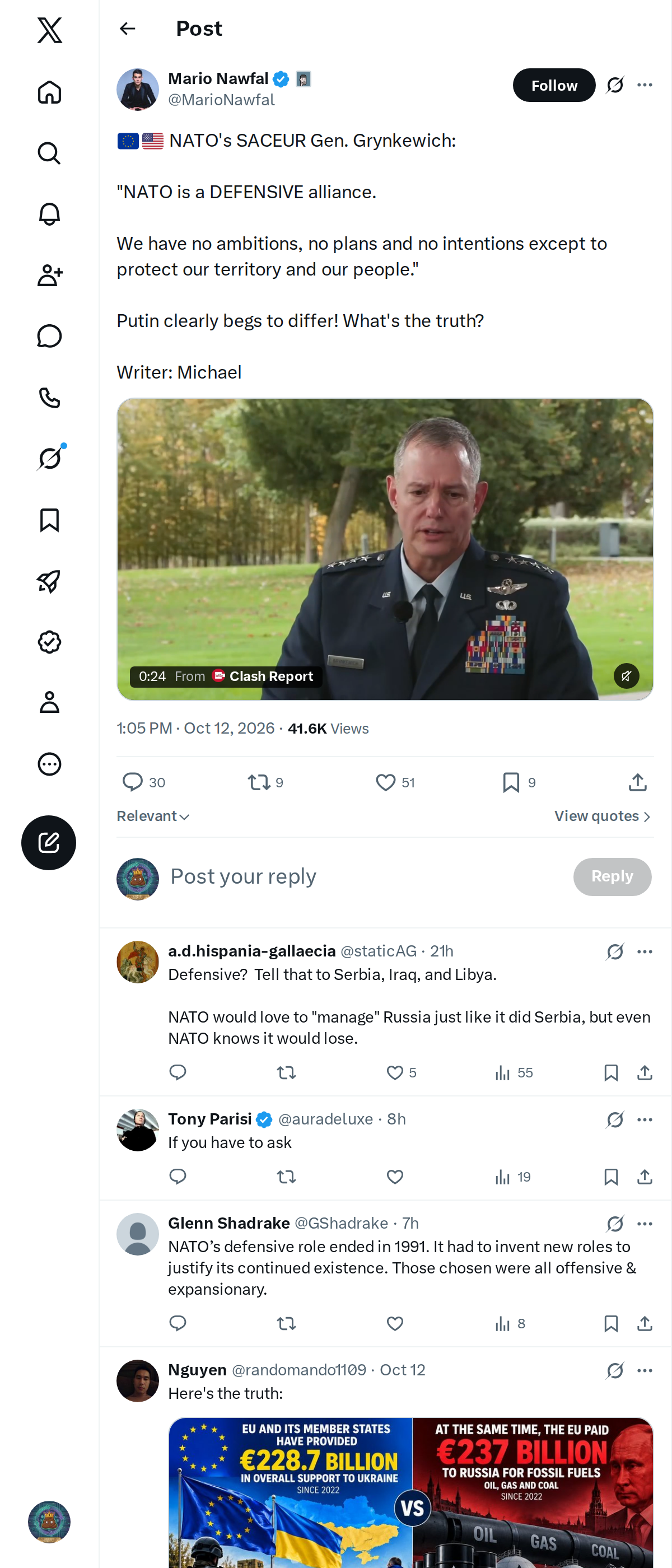
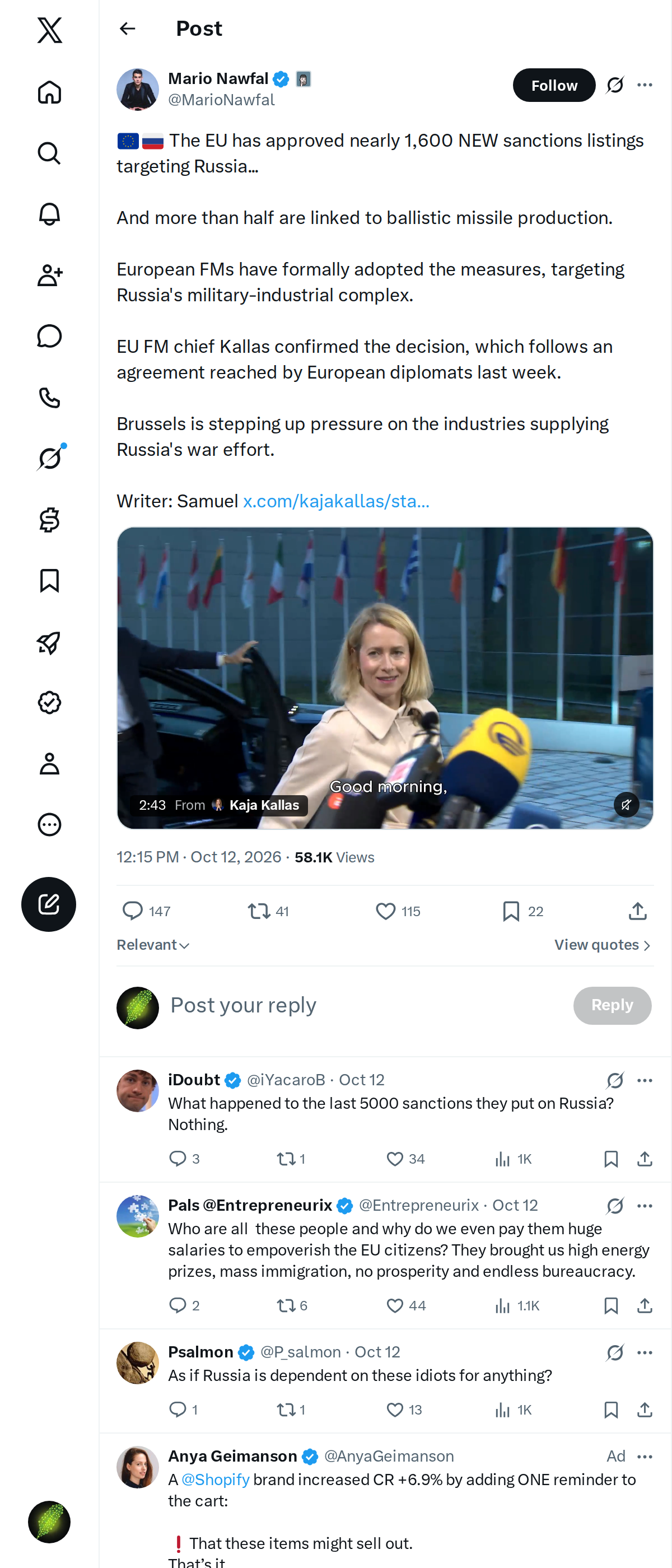
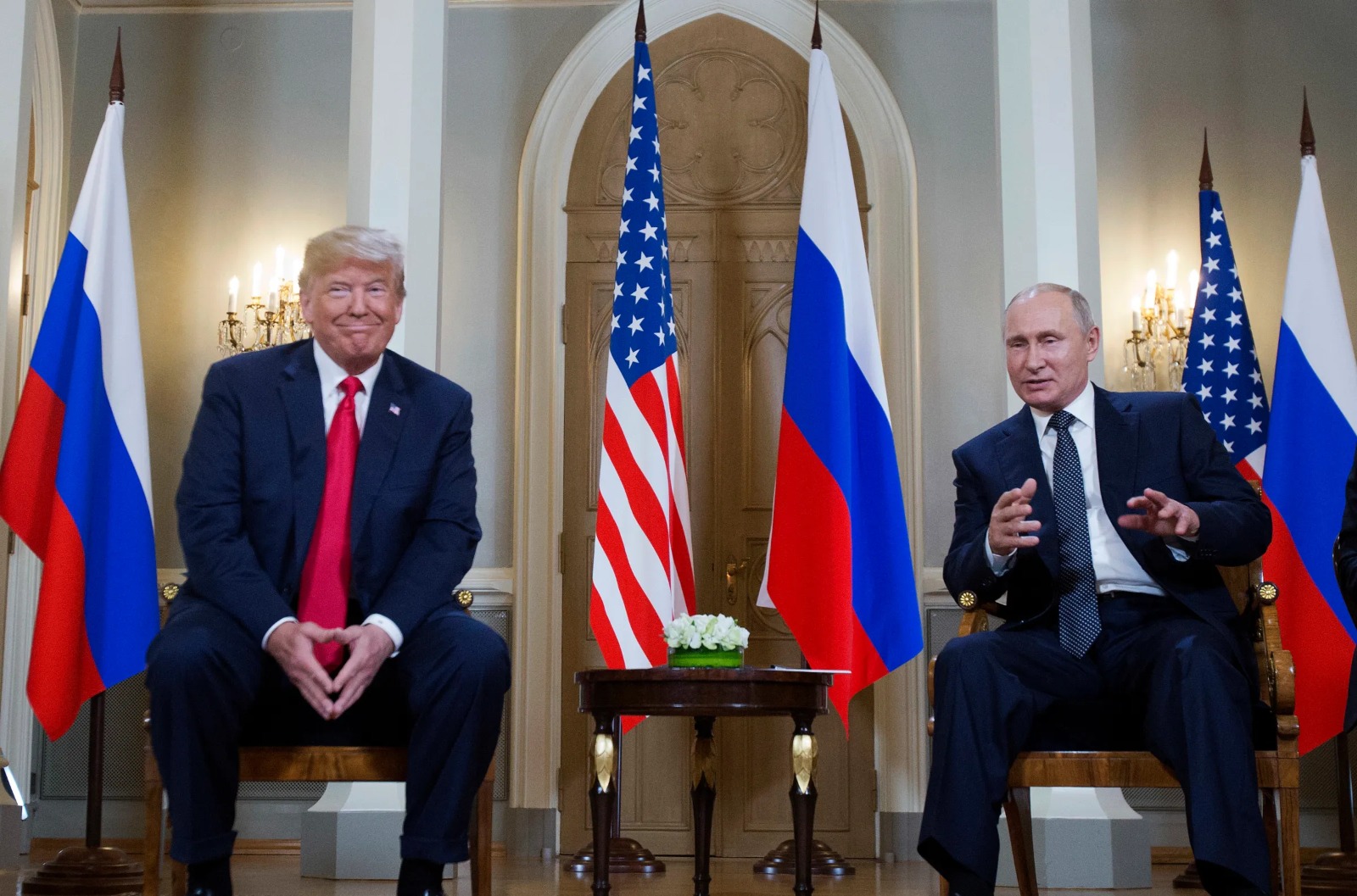
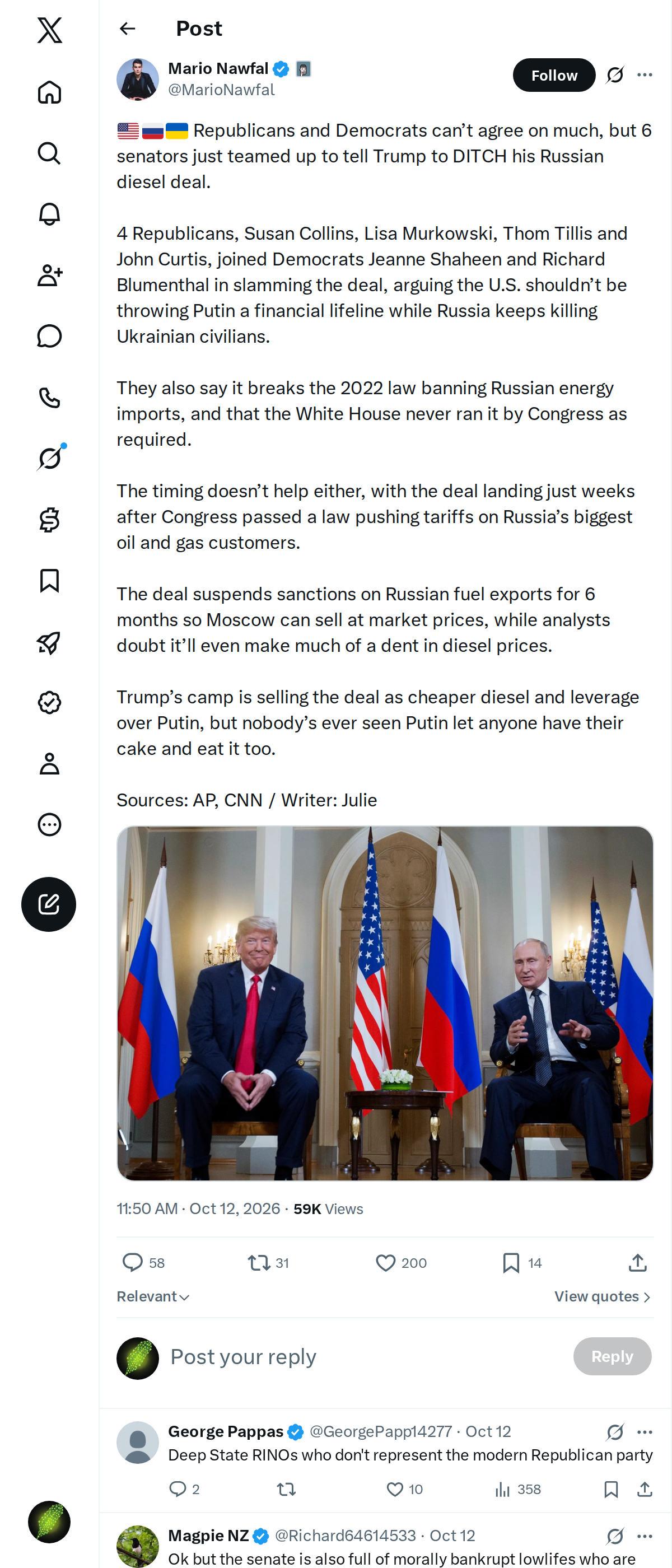
🇺🇸🇷🇺 Trump's Russian diesel deal could be the first step toward something extraordinary: America abandoning its longstanding alliance with Europe in favor of closer ties with Moscow.
While such a dramatic reversal may seem unlikely under present circumstances, the economic and geopolitical incentives driving Washington are beginning to change.
The terms of the diesel agreement offers an early example of this shift.
Washington has authorized Russian diesel transactions until April 2027, easing sanctions originally designed to deprive Moscow of revenue for its war in Ukraine.
The immediate motivation is lowering fuel prices, but the decision also demonstrates how economic interests can begin to outweigh longstanding geopolitical commitments.
For decades, Europe was an indispensable economic and strategic partner for America. Today, its value proposition is becoming increasingly difficult to defend.
Once a dominant engine of global economic growth, mainland Europe now struggles with industrial decline, expensive energy, sluggish growth and mounting defense costs.
And unlike Russia, it lacks the enormous oil and gas reserves that could compensate for those weaknesses.
This changes the strategic calculation for Washington.
Supporting Ukraine means spending billions confronting Russia, while rebuilding economic relations with Moscow offers access to vast natural resources, potentially cheaper energy and opportunities for trade.
One relationship demands enormous financial commitments. The other increasingly promises economic returns.
And as America's strategic priorities shift toward Asia, maintaining Europe's security becomes an increasingly difficult expense to justify.
The consequences could extend far beyond energy markets.
A stronger Russia emerging from the Ukraine war, combined with continued conservative leadership in Washington, could accelerate America's withdrawal from European security commitments and eventually bring NATO's future into question.
A complete American break with Europe remains a distant prospect, but the incentives that once held the transatlantic alliance together are changing.
We're now looking at the prospect of America gradually replacing its alliance with Europe with a strategic partnership with Russia.
Writer: Mhedi
t.co/DLtjsNtERa tweetkeep